
Recovery Services
Through outreach, engagement, advocacy, referrals, harm reduction, and recovery services, we help people access the support they need.
Recovery Services works with partners from across government and communities to address substance use disorder and the needs of people who use drugs.
-
-
Questions? Contact us:
-
 774 ALBANY STREET
BOSTON, MA 02118


Our Programs
Our Work3-1-1 for Recovery Services is the City of Boston’s confidential 24/7 referral center for:
- substance use treatment, and
- recovery services.
Visit the 3-1-1 website or call 3-1-1 (617-635-4500) for help.
Access to Harm Reduction, Overdose Prevention and Education (AHOPE) is the City of Boston’s harm reduction program and needle exchange site. The program provides a range of service to active injection drug users, including:
- Integrated HIV, Hepatitis, and STI testing
- free, legal, and anonymous needle exchange
- supported referrals to HIV, Hepatitis, STI treatment
- medical, overdose prevention education and training
- risk reduction supplies to reduce the spread of HIV and Hepatitis C infection
- risk reduction counseling
- supported referrals to all modalities of substance abuse treatment, and
- other services.
Opened in August 2017, the Engagement Center (EC) was a welcoming, low-threshold daytime space for individuals navigating homelessness and substance use near the intersection of Melnea Cass and Mass Ave. The Engagement Center is currently not open for client daytime services.
This is a six- to 12-month residential substance use treatment program. Entre Familia provides bilingual and bicultural, gender-specific, substance use disorder treatment to pregnant and postpartum women and their children. The program provides substance use disorders (SUDs) recovery services. Support is offered to pregnant and postpartum women who are 18 and older and Massachusetts residents.
Services include:
- clinical screenings
- assessments
- referrals to medical and mental health services
- residential care
- comprehensive case management
- childcare services
- family treatment planning, and
- referrals for specialized services to address developmental and behavioral difficulties and early intervention.
Mobile Sharps Team provides proactive sweeps in high volume areas. They respond to 311 calls for improperly discarded syringes in public areas. There are eleven outdoor kiosks for syringe disposal that are located in hard-hit areas.
Training on safe sharps disposal is given to:
- Boston Public Schools
- the Boston Housing Authority
- the Parks Department, and
- other City departments to improve collection and safety on City property.
Providing Access to Addictions Treatment, Hope and Support (PAATHS) is a one-stop shop. The program provides information for anyone looking for information about, or access to, substance use treatment services. That includes individuals, families, community partners, and other treatment providers. Residents can reach PAATHS by calling 3-1-1 or 1-855-494-4057.
Transitions is a 65-bed, evidence-based, short-term treatment program for adults focusing on:
- relapse prevention
- behavior modification
- interpersonal skill development, and
- re-socialization skills.
Facilitated client discussion groups meet daily. The groups explore life issues related to substance use.
Psychoeducational sessions provide clients information about:
- physiological
- psychological, and
- sociological consequences of substance use.
We offer one-to-one, goal-oriented sessions. These sessions help clients choose a suitable placement for continuing treatment.
The Youth Prevention Program was created in response to the Boston Youth Substance Use Prevention Strategic Plan. The plan was released in 2018.
The program focuses on supporting:
- Boston stakeholders
- community partners, and
- residents.
We do this through four key areas:
- Educational material and media messages to youth and their families
- Health education around substance use and social-emotional learning.
- Expanding engagement with all youth populations
- Coordinating prevention efforts between public, private, and nonprofit sectors
Community Affairs
COMMUNITY AFFAIRSNeighborhood Engagement Teams
Builds relationships with people on the street, connecting them to substance use and mental health services. The teams also support local businesses with constituent issues, linking them to appropriate City services. Teams operate in Nubian Square and East Boston.
Low-Threshold Day Spaces
Boston Living Center offers support groups, harm reduction supplies, service referrals, and basic amenities to people who use drugs and experience homelessness.
The Nubian Square Task Force
A coalition of community, public health organizations, and businesses that share and coordinate resources in the Nubian Square area, supporting people who use drugs and experience homelessness.
Special Initiatives
Innovation
Innovation
Low-threshold Shelters
BPHC coordinates and provides funding to six Low-Threshold Shelters that stabilize people who use drugs and experience homelessness, offering holistic care and navigation to permanent housing.

Overdose Data to Action
CDC-funded project using data to reduce overdose mortality, especially among historically underserved and overdose-burdened populations. Activities include deploying substance use navigators in community health centers, expanding naloxone distribution/training, educating medical providers, and creating a data dashboard.

Low-Threshold Work Program
People who use drugs face hurdles to employment. The Low-Threshold Work Program provides pay-per-day opportunities to participants, building vocational skills and self-efficacy. The program connects participants to case management and long-term employment.
Public Health Vending Machines and Naloxone Kiosks
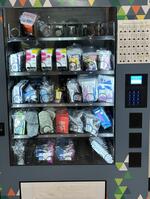
Public Health Vending Machines
Public health vending machines are a low-barrier way to distribute essential health supplies and resources. Vending machines provide greater privacy than traditional services, attracting clients who may avoid services due to fear of discrimination. We partner with local agencies to manage and stock the vending machines while we provide technical assistance.
Vending machines can help distribute:
- Supplies that reduce the risk of overdose and infectious disease transmission (e.g., naloxone, sterile syringes, pipes)
- Educational resources (e.g., safer drug use tips, overdose response wallet cards)
- Items that meet other community health needs (e.g., socks, hygiene kits, pregnancy tests)
There are different processes for accessing the indoor and outdoor vending machines:
- Indoor vending machines are embedded within health programs. Clients connect with health program staff and register a pin code to access the machine.
- Outdoor vending machines offer 24/7 access. Clients input their zip code to access the machine.
Find a public health vending machine near you by clicking the button below.
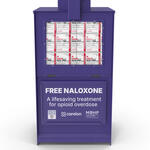
Naloxone Kiosks
Naloxone kiosks are recycled newspaper boxes that serve as a low-barrier way to distribute naloxone and may reach populations who prefer more discrete access. They may also offer other public health supplies (e.g., fentanyl test strips, condoms) as well as educational resources.
This video shows how one of our partners has utilized the kiosk to expand community access to naloxone.
We partner with local agencies that stock supplies and engage their communities while we provide technical assistance and support naloxone procurement. The Massachusetts Behavioral Health Partnership provided funding for an initial batch of 8 kiosks.
POLICY AND ADVOCACY
- Boston Opioid Settlements Project – Boston is engaging communities about the opioid settlements, helping families heal, and preventing further harm.
- Long Island Recovery Campus – The City of Boston is committed to rebuilding the Long Island bridge and creating a recovery campus.
- Massachusetts Coalition for Addiction Services – A coalition of organizations advocating to fund harm reduction, treatment, and recovery support.
- Association for Behavioral Healthcare – A statewide association representing community-based mental health and addiction treatment provider organizations.
- Big Cities Health Coalition – Public health leaders from major cities gather to share strategies and resources and unite around advocacy.
Resources
Training Manual: Overdose Prevention for Businesses
An actionable toolkit for businesses to educate their employees and reduce overdose risk.
City of Boston Harm Reduction Toolkit
We need to build a culture of harm reduction in Boston.
Substance Use Services and Supports Flyer
A flyer compiling information about day spaces and other services helpful for people who use drugs.
Overnight Low-Threshold Spaces: Practice Guidance
This guidance is for developing overnight low-threshold spaces for those experiencing substance use disorder and homelessness. (Updated March 2023)
Resources for the Deaf and Hard-of-hearing
Learn about substance-use recovery services for those who are deaf and hard-of-hearing.
Youth Substance Use Prevention Strategic Plan
Our guide for youth substance use prevention efforts in Boston for the next several years.
SafeSpot Overdose Prevention Helpline
SafeSpot connects people who are using drugs with a trained operator who can call for help in case of overdose. Call 24/7 at 1-800-972-0590.
Get Involved
Everyone has a role to play in ending the addiction crisis. Here are some ways to get involved.
News and Announcements
News
Who's Involved:

-
-
Questions? Contact us:
-
774 ALBANY STREET
BOSTON, MA 02118
