
Open Space Acquisition Program
Our city is growing. More people mean we need more open space: parks, playgrounds, urban wilds. This program seeks to acquire properties to create these new open spaces for everyone.
-
Still Have Questions? Contact:
Boston Parks and Recreation Department Senior Planner, Kate Oetheimer
-
 617-635-4505
 -
 1010 MASSACHUSETTS AVENUE 3RD FLOOR BOSTON, MA 02118

About
Thanks to funding from Boston’s Community Preservation Act (CPA), the Parks Department has established the Open Space Acquisition Program. In addition to CPA funds, the City also leverages capital funding, partnerships, and grants to support the acquisition and permanent protection of parks and open space. We aim to expand open space in areas with limited access and protect valued cultural and natural sites for future generations.
We welcome you to suggest new open spaces for protection. Start by filling out our Open Space Acquisition suggestion form.
Using tools like Planning for Future Parks, we evaluate how potential sites align with our overall parks system. With initial funding from the Community Preservation Act, we can move quickly to begin to secure land for future open space. While Boston has expanded its park system since its early days, growth has struggled to keep pace with increasing population and development, making strategic acquisition more important than ever.
KEY CONSIDERATIONS

-
Environmental justice and equity
-
Losses of valuable natural areas to development
-
Increasing population and density
-
Mitigating excessive heat and flooding events as a result of a changing climate
SUSTAINING A STRONG PARK SYSTEM

ADDING NEW PARKS
Acquiring new parklands and natural areas to fill in gaps where there are no such spaces, or to enhance existing spaces in areas that are growing and putting extra pressure on existing open spaces.

INCREASING MAINTENANCE
Increased funding for high quality park maintenance to match growing maintenance responsibilities.

RENOVATING EXISTING PARKS
Renovating our existing park system with state-of-the-art designs that can better serve existing and new needs
Make a suggestion
We want to hear from you! Do you know of a location where open space CAN be created?
Please complete our brief suggestion form. Have multiple locations in mind? Please submit a form for each location. You can also call or email with your ideas.
You will receive an email acknowledging your submission.
If you have not received an acknowledgment after 30 days, please feel free to follow up with our department.
Latest news
Latest news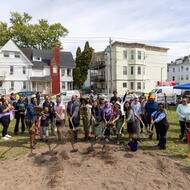
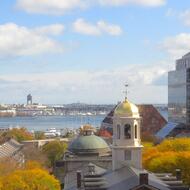

Common terms
In this context, acquisition is used to describe either:
- the process of transferring ownership of a parcel to Parks and Recreation, and/or
- the process of creating open space on a parcel.
OPEN SPACE:
This term is used interchangeably with "parks". It can describe permanently protected and publicly accessible:
- urban wilds and conservation lands
- plazas
- places with sports and other recreational opportunities, and
- landscaped areas with seating.
Vacant lots and buildings are not considered open space, nor are streets and sidewalks. For this planning effort, we want you to highlight important areas that should become open space.
Parcel is a real estate term describing an area of land owned by someone. There's an invisible line that denotes ownership and tax liability. This term is used interchangeably with "property." Often, multiple parcels can make up a park. For instance, Franklin Park is made up of a group of parcels that function as one continuous park. Sometimes only a portion of a parcel is devoted to a park.
PROTECTION:Protection is a legal method to constrain types of development on a parcel, regardless of ownership, that conflict with its use as an open space. There are varying degrees of protection that affect:
- how long protection is in place, and
- what can happen on the parcel, and where.
The Parks and Recreation Department advocates for permanently protected and publicly accessible parcels. We want the public to have access to open space forever.
Related initiatives
Open Space and Recreation Plan
Updating the seven-year plan for improving and protecting open space in Boston.
Planning for Future Parks
Planning for Future Parks a long-term visioning plan. We prioritize parcels of land to acquire and protect for public use.
Healthy Places
A coordinated planning effort to cool the city, expand the urban forest, and improve the park system.
Who's Involved:

-
Still Have Questions? Contact:
Boston Parks and Recreation Department Senior Planner, Kate Oetheimer
-
617-635-4505
-
1010 MASSACHUSETTS AVENUE 3RD FLOOR BOSTON, MA 02118
