
Keeping Cool in the Heat
We want residents and visitors to be safe during hot weather and enjoy all our city has to offer. Find tips and resources on how to stay safe and healthy in the Boston heat.
Heat affects people and neighborhoods unequally. Infants, children, people over 65, and those who have chronic medical conditions or disabilities, work outdoors, experience homelessness, use drugs, or live in areas with less tree coverage are more at risk.
Heat-related deaths and illnesses are preventable. Learn how to protect yourself and your loved ones. Call 911 if you have an emergency situation or see a person experiencing homelessness or someone out in the heat who appears immobile or disoriented.
-
Still have questions? Contact:
Emergency Management
-
 85 Bragdon Street
Boston, MA 02119


Cooling Resources
AlertBoston
AlertBoston is the City's Emergency Mass Notification System.
Cooling Resource Map
Our cooling resource map shows cooling resources across the City.
Keeping Kids Cool
Hot weather affects infants and young children more than most adults. Heat's potential impacts on childhood health and development can be lifelong. All children should have the opportunity to safely play, learn, and thrive in summer!
BCYF Cooling Centers
BCYF centers become cooling centers during periods of extreme heat.
State-Owned Pools
The Massachusetts Department of Conservation and Recreation owns and operates pools and spray decks in and around Boston.
Before A Heatwave
Prepare BeforeSign up for Alert Boston to be notified:
- Declared Heat Emergencies
- Available resources in response
- Protective actions to take
- Alerts are multilingual
- Locate your nearest cooling resources
- Cooling Centers: Boston Centers for Youth & Families (BCYF) community centers become cooling centers during periods of extreme heat. Anyone can cool off inside with air conditioning during their regular operating hours.
- Pools and Tot Sprays Map
- State Owned Pools
- Parks
- Boston Public Libraries
- Individuals with underlying medical conditions should speak with their doctor about specific recommendations for extreme heat.
- Have plenty of water on hand
- Keep devices charged and consider backup power (like a battery pack or generator).
- If you rely on life-sustaining medical equipment, be sure to have an emergency plan in case of a power outage.
- Prepare meals that don’t require an oven or stove.
- Use passive cooling in your home: Cover windows to shade the room using curtains, towels, or aluminum-foil-covered cardboard reflectors.
Actions you can take!
- Use child window guards in addition to screens on any open window on the second story or above.
- Install air conditioners and use ceiling or standing fans
- Be sure window air conditioners are secure.
- Replace/clean air filters in your air conditioner at the beginning and end of the summer.
- Check air-conditioning ducts for proper insulation.
- Weather-strip doors and sills to keep cool air in.
- Reflect heat back outside by installing temporary window reflectors between windows and drapes, such aluminum foil-covered cardboard.
- Cover windows that receive morning or afternoon sun with drapes, shades, awnings or louvers. Outdoor awnings or louvers can reduce the heat entering a home by up to 80 percent.
- Preparing Your Home ASL Video
Here are some resources you can look into!
- Visit Boston Energy Saver to find ways to lower your energy bill, use less energy, and make upgrades to your property to stay cooler in the summer.
- Visit Boston Community Choice Electricity to enroll in the City’s affordable renewable energy program that can help residents reduce their energy bills.
- Visit Boston tree planting program to request a tree planting on the sidewalk in front of your home or business and help lower the ambient air temperature near your property.
During A Heatwave
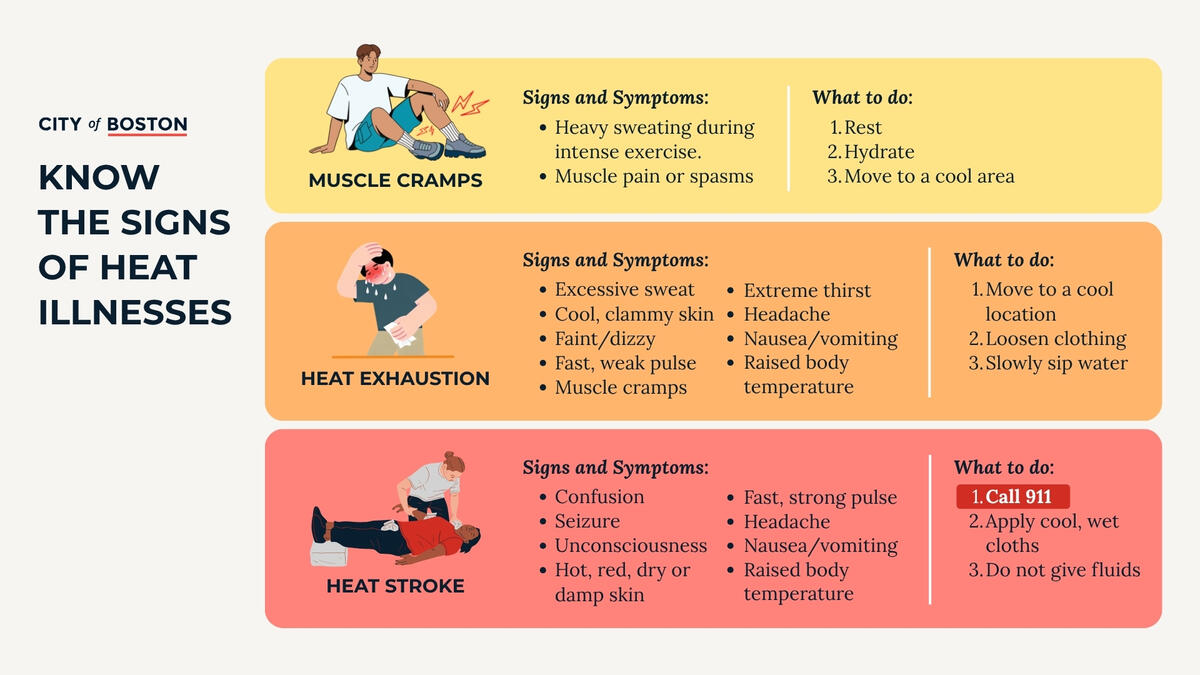
During A HeatwaveExtreme heat can affect you in many ways. Stay cool and learn the signs of heat illness. Anyone who is confused, passed out, or badly sunburned should get immediate medical attention.
Heat Cramps
Signs and Symptoms:
- Heavy sweating during intense exercise.
- Muscle pain or spasms
What to do :
- Rest
- Hydrate
- Move to a cool area
Heat Exhaustion
Signs and Symptoms:
- Excessive sweat
- Cool, clammy skin
- Faint/dizzy
- Fast, weak pulse
- Muscle cramps
- Extreme thirst
- Headache
- Nausea/vomiting
- Raised body temperature
What to do:
- Move to a cool location
- Loosen clothing
- Slowly sip water
Heat Stroke
Signs and Symptoms:
- Confusion
- Seizure
- Unconsciousness
- Hot, red, dry or damp skin
- Fast, strong pulse
- Headache
- Nausea/vomiting
- Raised body temperature
What to do:
- Call 911 immediately
- Apply cool, wet cloths
- Do not give fluids
- If you see an animal locked in a car on a hot day, find the owner as soon as possible. If you can't find the owner, call 911 or contact Animal Care and Control.
- When leaving your car, check to be sure everyone is out. Don't forget about sleeping children.
- Keep a stuffed animal in your car seat to remind yourself when a child is in the car. When the child is buckled in, place the stuffed animal in front with the driver.
- Bodies can lose a lot of water on hot days. You may need to drink more water than usual to stay hydrated. Don't wait until you're thirsty to drink.
- Avoid alcohol and sugary or caffeinated drinks.
- Warning: If your doctor limits the amount of fluid you drink or has you on water pills, ask how much water you should drink when it's hot.
- ASL Video Information on Drinking Water
- Limit your outdoor activity to morning and evening hours.
- Avoid strenuous activity.
- Let your body acclimate to the heat before you try to exercise.
- Use a buddy system when working outside.
- If you become lightheaded, confused, weak or faint, stop all activity and find shade or a cool area to rest. Call 911 immediately if your symptoms don't improve.
- ASL Video Information on Resting
- Wear protective, loose-fitting clothing, including long-sleeve shirts and hats.
- Sunburn raises body temperature and makes it more difficult to cool down. Adults and children should use sunscreen containing an SPF-15 or higher.
- Clothing Information ASL Video
During periods of extreme heat, individuals without access to an air-conditioned space are at high risk for heat exhaustion and heat stroke. A few hours in air conditioning can help your body recover and stay cool when you go back into the heat. Electric fans will not prevent heat-related illness.
- Stay indoors and in an air-conditioned place if possible.
- If your home doesn't have air conditioning, go to a shopping mall, public library, or visit a cooling center.
- Take a cool shower or bath.
- Use your stove and oven less to maintain a cooler temperature in your home.
- Please call your utility company to report any outages. You can also call 3-1-1 with any concerns or questions.
- Eversource: 1-800-592-2000
- National Grid: 1-800-322-3223
- Boston Water & Sewer Commission: 617-989-7000
- Discard any perishable food that has been at temperatures above 40°F for 4 hours or more. This includes foods like meat, fish, cut fruits and vegetables, eggs, milk, and leftovers. Learn more.
- ASL Video Information on Losing Power
Just as extreme heat can affect your body, it can also affect your mood and emotional well-being. You may notice increased stress, anxiety, irritability, depression, difficulty sleeping, or feelings of isolation.
- Stay connected with family, friends, or neighbors, especially if you or they may be more vulnerable.
- If you feel emotionally overwhelmed, move to a cool place, drink water, and take breaks from stressful activities. Reach out to someone you trust or use one of the free resources below.
- Check in with yourself, are you feeling like yourself? Also check in with children, older adults, people with chronic physical or mental health conditions, and anyone without access to air conditioning to see how they're doing.
Resources
- Massachusetts Behavioral Health Help Line: Call or text 833-773-2445 for free, confidential behavioral health support and help finding services. Available 24/7 with interpretation in 200+ languages. Deaf or Hard of Hearing: Dial 711 or use your preferred relay service.
- 988 Suicide and Crisis Lifeline: If you or someone you know is experiencing hopelessness, suicidal thoughts, or a mental health crisis, call or text 988. Free, confidential support is available 24/7.
- SafeLink: If you are concerned about escalating conflict, intimate partner violence, or domestic violence, call 877-785-2020. Free, confidential support is available 24/7 in English, Spanish, and 130+ languages. Deaf or Hard of Hearing: Dial 711.
- Boston Area Rape Crisis Center: If you have experienced sexual violence, call 800-841-8371 for free, confidential support. Services are available 24/7, with online chat from 9 a.m. – 11 p.m., for survivors ages 12 and older and their loved ones.
Health Information for Communities
Health InformationHot weather affects infants and young children more than most adults. Heat's potential impacts on childhood health and development can be lifelong. All children should have the opportunity to safely play, learn, and thrive in summer, so it is critical to understand how heat affects children and what we can do to keep them safe.
Click the button below for resources specific to protecting young children.
Protective Actions
- Stay cool. Spend time in air-conditioned spaces.
- Know the signs of heat exhaustion (excessive sweat; cool, clammy skin; faint/dizzy; fast, weak pulse; muscle cramps; extreme thirst; headache; nausea/vomiting; raised body temperature)
- Stay hydrated, avoid strenuous activity, and use sunscreen.
Did you know?
- During periods of extreme heat, individuals without access to an air-conditioned space are at high risk for heat-related illnesses, like heat stroke, heat cramps, and heat exhaustion.
- Your body can lose a lot of water on hot days. You may need to drink more water than usual to stay hydrated.
- Sunburns can make it more difficult to cool down. Wear sunscreen and avoid staying in the sun. If outside, seek out shaded places.
- Individuals can become dehydrated during extremely hot weather. Anyone passed out or badly sunburned is at increased risk of dehydration and should get immediate medical attention.
Resources
- Emergency shelters are open 24 hours a day in Boston during extreme heat.
- Stay cool. Find public cooling centers, public pools, parks, beaches, and Boston Public Libraries.
Protective Actions
- Stay cool. Spend time in air-conditioned spaces.
- Make sure a friend or neighbor knows to check on you.
- Seek medical care if you start to feel unwell.
Did you know?
- A single hot day can lead to health problems, but multiple hot days in a row bring the most risk.
- Older people may not adjust as well as younger people to sudden changes in temperature.
- Chronic medical conditions and some medications can affect the body’s ability to control its temperature or sweat properly. Talk to your doctor in advance and seek help early if you feel unwell.
- Mobility issues may be worsened by hot weather, which can make it more difficult to travel to cooling centers when it’s hot. Please plan ahead.
- Those who live alone are at heightened risk. Consider asking a friend or neighbor to check on you.
Resources
- Stay cool. Find public cooling centers, public pools, parks, beaches, and Boston Public Libraries.
- Plan ahead and schedule Meals on Wheels or a home health aide to visit on hot days.
- Schedule a ride with the MBTA’s The RIDE or Age Strong Commission Shuttle. Call 3-1-1 to see if you qualify.
Protective Actions
- If a person appears unconscious, call 911. Falling asleep in extreme heat can be deadly.
- Stay cool. Spend time in air-conditioned spaces.
- Avoid swimming if using drugs because the risk of drowning is higher.
Did you know?
- Bodies can lose a lot of water on hot days. You may need to drink more water than usual to stay hydrated.
- Impaired consciousness decreases the ability to sense and respond to temperature changes, and increases the risk of heat stroke and sunburns.
- Sunburns can raise your body temperature and make it more difficult to cool down. Wear sunscreen and avoid staying in the sun.
- Drugs can directly impair the body's ability to cool itself down, leading to an increased risk of heat stroke. Seek medical care early if you feel unwell.
Resources
- Access, Harm Reduction, Overdose Prevention and Education (AHOPE) provides harm-reduction services for active substance use.
- Providing Access to Addictions Treatment, Hope and Support (PAATHS) has walk-in services, providing access to treatment placement and information regarding treatment.
- Learn more about recovery services in Boston here.
Protective Actions
- Individuals with underlying medical conditions should speak with their doctor about specific recommendations for extreme heat.
- Check with your doctor about how medications can affect the body's response to heat.
- Stay hydrated, avoid strenuous activity, and talk to your doctor about replacing lost electrolytes.
- Make sure a friend or neighbor knows to check on you.
Did you know?
- Certain chronic diseases may impair the ability to sense and respond to temperature changes. Talk to your doctor in advance.
- Individuals with asthma, COPD, heart disease, heart failure, diabetes, kidney disease, mental illness, or obesity are more likely to suffer the negative health effects of extreme heat.
- Medications can worsen the effects of extreme heat. Heat can also impact the potency and effectiveness of medication. There can also be physical damage to medication if not stored correctly due to the impacts of heat. Review medications with your doctor and create a plan for hot days.
- Excessive sweating can remove important salts and minerals from your body. Stay hydrated and talk to your doctor about how to replace these electrolytes.
- If your doctor limits the amount of fluid you drink or has you on water pills, ask how much you should drink when the weather is hot.
Resources
- Stay cool. Find public cooling centers, public pools, parks, beaches, and Boston Public Libraries.
- Plan ahead and schedule Meals on Wheels or a home health aide to visit on hot days.
- Schedule a ride with the MBTA’s The RIDE or Age Strong Commission Shuttle. Call 3-1-1 to see if you qualify.
Protective Actions
- Check with your doctor about how medications can affect the body's response to heat.
- Stay cool. Spend time in air-conditioned spaces.
- Make sure a friend or neighbor knows to check on you.
Did you know?
- A single hot day can lead to health problems, but multiple hot days in a row bring the most risk.
- Some disabilities can make it difficult to regulate body temperature. Decreased ability to sweat or trouble with breathing can put you at higher risk for overheating. Talk to your doctor and plan ahead for hot days.
- Before travelling to a cooling center, call 3-1-1 to check if they have accommodations for individuals with limited mobility.
- Individuals with disabilities may not be able to express their discomfort or raise alarm. Have a clear plan to notify friends or neighbors if you need assistance.
Resources
- Stay cool. Find public cooling centers, public pools, parks, beaches, and Boston Public Libraries.
- Plan ahead and schedule Meals on Wheels or a home health aide to visit on hot days.
Schedule a ride with the MBTA’s The RIDE or Age Strong Commission Shuttle. Call 3-1-1 to see if you qualify.
Protective Actions
- Hydrate often with cool drinking water.
- Take frequent breaks in shaded or air-conditioned spaces.
- Learn about the signs and symptoms of heat stress and your employers’ emergency plans for when you experience symptoms.
- If you experience signs of heat exhaustion, stop working immediately, find a cool area and hydrate.
- Acclimatize to the heat by building physical tolerance through gradual exposure. The U.S. Department of Labor’s Occupational Safety and Health Administration (OSHA) recommends shorter workdays in the heat during the first 1-2 weeks.
- New workers should work only 20 percent of the normal duration on their first day.
- Increase work duration by 20 percent on subsequent days until the worker is performing a normal schedule.
Did you know?
- Every year, thousands of workers exposed to heat in their workplaces become sick from occupational heat exposure, and some cases are fatal.
- Outdoor and indoor workers exposed to extreme heat or work in hot environments may be at risk for heat-related illnesses.
- Heat stress can result in heat-related illness, such as heat stroke, heat exhaustion, heat cramps, and heat rashes.
- Hot-humid conditions are associated with discomfort, irritability, loss of concentration and fatigue.
- Heat stress is responsible for productivity losses between 29 - 41%
- The City of Boston has an Ordinance that provides City workers and contractors protections from heat illness and injury.
This document outlines several easy-to-deploy strategies the City is using to keep residents cool during extreme heat events and throughout the summer. Click the button below to access the Summer Cooling Guide!
Check out this printable guide for summertime in Boston!
Latest News
No related posts are available at this time.
Additional Resources
Boston is experiencing higher temperatures and more frequent heatwaves due to climate change. A heatwave is three or more consecutive days above 90°F. Across 50 large U.S. cities, the average number of heatwaves has doubled since the 1980s, and the length of the heatwave season has increased by about 30 days. Learn more about heat trends in Boston on the Preparing for Heat page and discover ways the city is becoming more resilient on the Heat Resilience Solutions for Boston page.
We provide Boston residents age 60 and older with free transportation within the City of Boston to non-emergency medical...
To empower local community programs to improve the health and quality of life of the seniors they serve so that no one is...
The RIDE paratransit service provides door-to-door, shared-ride public transportation to people who can’t use the subway, bus...
Recovery Services works with partners from across government and communities to address substance use disorder and the needs...
-
Still have questions? Contact:
Emergency Management
-
85 Bragdon Street
Boston, MA 02119
