
A Closer Look at the Restoration of Copp’s Hill Burying Ground’s Historic Fence
Go behind the scenes with Kelly Thomas of the Historic Burying Grounds Initiative to learn how specialized craftsmanship and historic preservation techniques are helping restore one of the Freedom Trail's longstanding landmarks.
Boston Parks and Recreation’s Historic Burying Grounds Initiative recently announced the completion of repairs to Copp’s Hill Burying Ground made possible with the help of a Freedom Trail Foundation Preservation Grant. The project aimed to repair damage from a large tree that had fallen during a storm, destroying four sections of historic cast-iron fencing at Copp’s Hill Burying Ground.
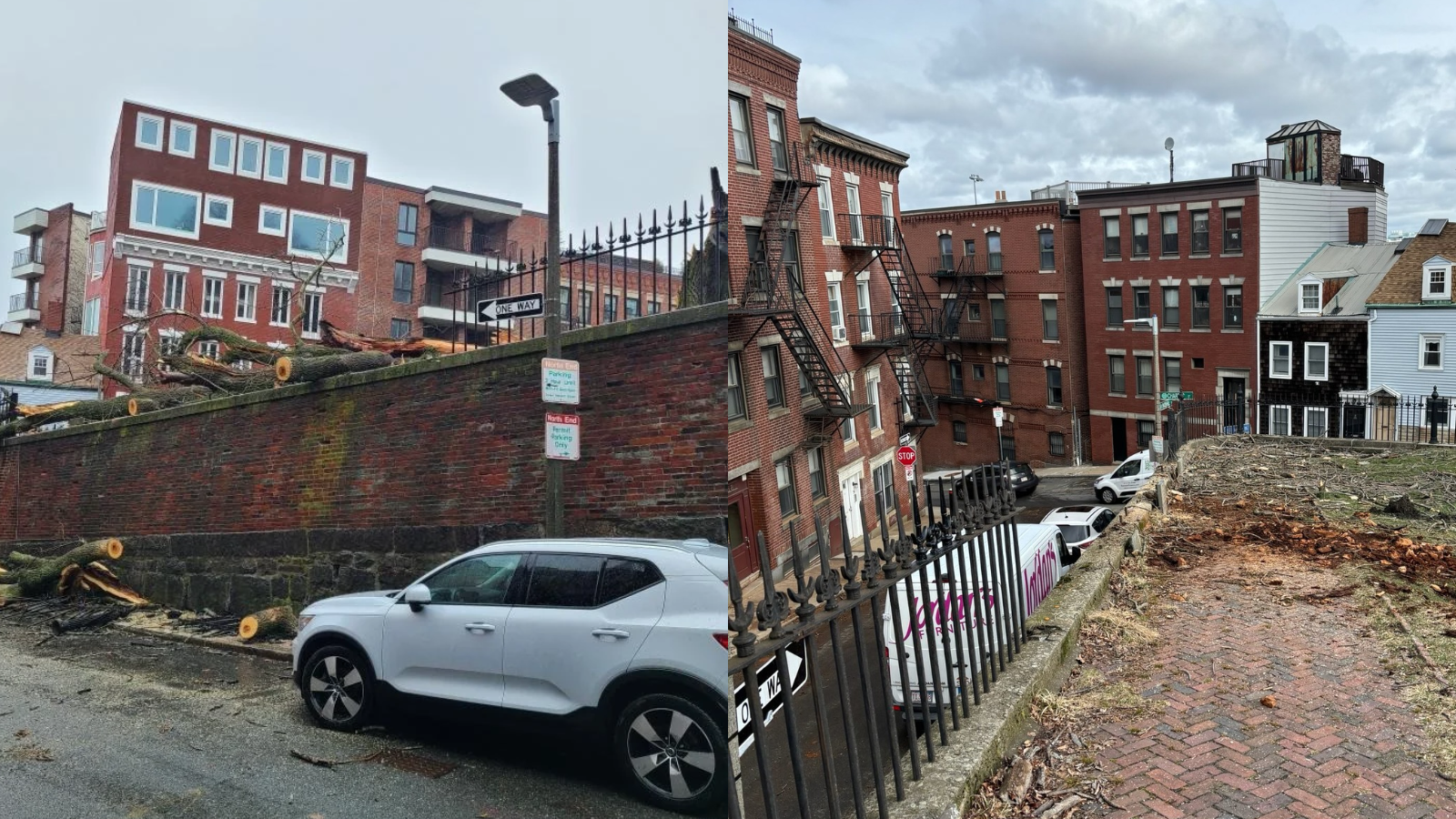
This stretch of historic fencing sits atop a brick and granite wall that rises high above Snow Hill Street in the North End. Originally called North Burying Ground, Copp's Hill was laid out in 1659 as Boston’s second burying ground and is the final resting place of over 10,000 Bostonians, including prominent historical figures as well as thousands of free and enslaved Black residents, artisans, tradespeople, and craftspeople who helped shape the City’s early identity. The cast-iron fence surrounding the burying ground has long been a fixture in the landscape of the neighborhood and its restoration helps preserve the character and architectural details that connect this site to the past.

The restoration was made possible thanks to our partners at the Freedom Trail Foundation who provided a $16,667 Preservation Grant. The grant helps support preservation, rehabilitation and restoration for official Freedom Trail sites. These projects help mitigate the adverse effects of the elements and man-made wear and tear on these sites.
Boston Parks and Recreation worked with a landscape architect to produce construction documents and publicly bid the project. During the planning process, it was determined that all broken fence elements along both sides of the fence, such as missing finials or damaged fence posts, should also be repaired. The bid was awarded and new parts for the fence were cast in a foundry hired by the contractor.
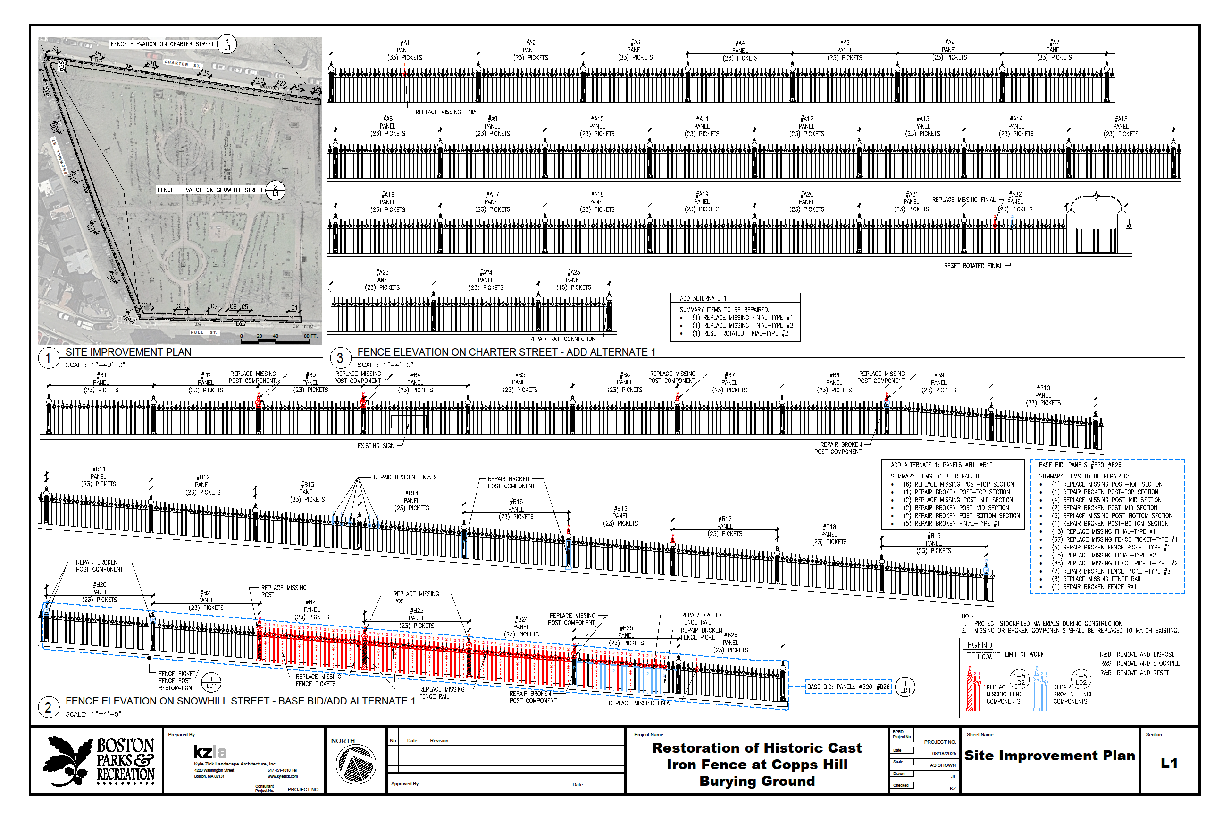
Repairing cast-iron fence posts comes with its own difficulty, according to Kelly Thomas, Director of the Historic Burying Ground Initiative. A number of the posts at Copp’s Hill had already been damaged throughout the years by rust and cold Boston winters. The fence posts themselves were particularly difficult to restore due to an early 20th century repair project that removed the original granite fence footing and poured concrete around the bottom of the pickets, partially covering the post bases. In order to repair this in 2026, we re-covered a portion of the new fence-post bases with concrete to blend into the rest of the fencing.
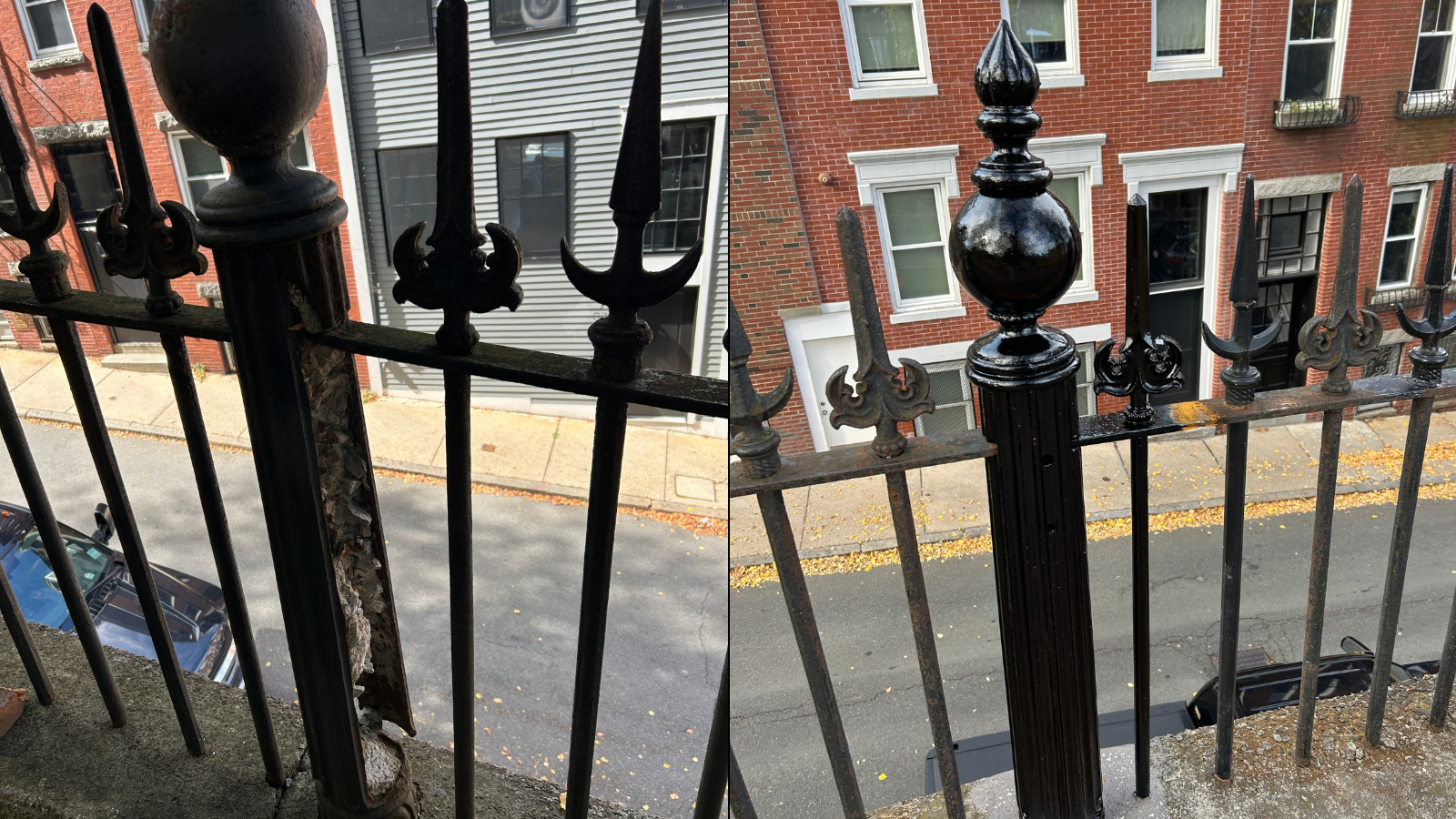
Traditional cast iron fencing can be found in historic sites across Boston and its composition differs from the steel typically used today. Cast iron must be heated to a molten state at over 2,000 degrees Fahrenheit and then poured into molds for the individual pieces of the fence. In large diameter pieces such as the fence posts, there is an inner part of the pattern that produces a hollow shape, because a cast-iron post would be extremely heavy! The patterns for the fence components are custom made and can be used repeatedly. The pickets are fixed in place in the concrete footing with lead (traditional method) or non-shrink grout (modern method), depending on the circumference of the hole.
The completed repairs are an important step in preserving the history of Copp's Hill Burying Ground and the surrounding North End neighborhood. While the newly restored sections stand out with their fresh coat of paint, additional work will be needed to maintain the more than 300 feet of fencing along Snow Hill Street.
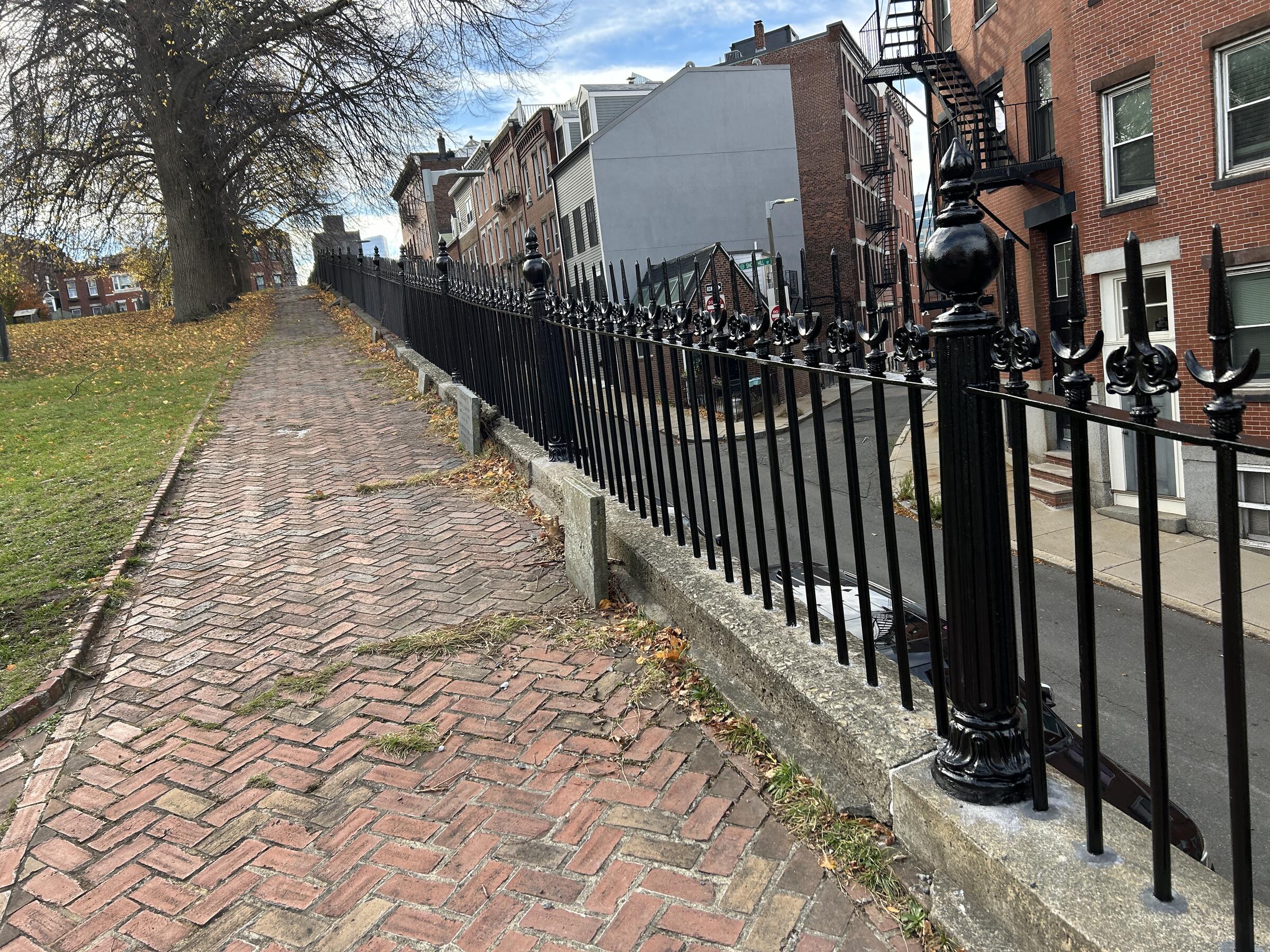
The Historic Burying Grounds Initiative manages sixteen different burying grounds located in Boston, ranging in date from 1630 to 1841. Through this initiative and partnerships like the Freedom Trail Foundation Preservation Grant program, Boston Parks and Recreation continues working to protect these historic spaces and the stories they hold. Preserving these places ensures that future generations can continue to experience, learn from, and connect with Boston's history.
- Last updated:
-

- Last updated:
-
